 September 17, 2026
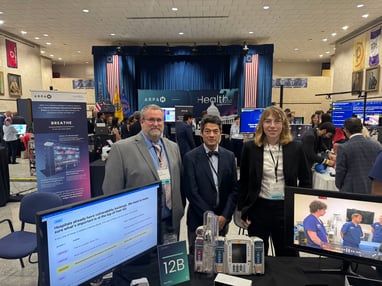
Archimedes Center participated in Health250 in Washington, D.C. ARPA-H’s first-ever showcase highlighted breakthrough research accelerating the future of American healthcare and biotechnology.
Professor Kevin Fu, Archimedes Director, and David Nathans, Archimedes Executive Director, were invited to showcase advancements in PATCH, the team’s initiative to help hospitals address cybersecurity vulnerabilities while protecting patient care.
Health250 strengthened ARPA-H’s mission bringing together scientific innovation and real-world solutions that improve patient care. The agency supports ambitious research with the goal of compressing development timelines from decades to years and making breakthroughs affordable and accessible to everyone who needs them.
For PATCH, that challenge centers on the connected technologies hospitals depend on every day. Healthcare organizations must secure complex fleets of medical devices while managing limited IT resources and little tolerance for downtime. Security updates require careful testing to avoid disrupting clinical operations.
Supported through ARPA-H’s Universal PatchinG and Remediation for Autonomous DEfense (UPGRADE) program, PATCH is developing high-fidelity digital twins of devices across hospital systems. These simulated environments are designed to help teams understand the effects of security patches before deploying them in clinical settings, supporting decisions that preserve patient safety and limit operational disruption.
Led by Dr. Fu, PATCH brings together academic, clinical, and industry expertise to develop whole-hospital simulation, a vulnerability management platform, and scalable open-source tools. The goal is to accelerate the discovery and remediation of vulnerabilities while keeping patient care uninterrupted.
Showcasing PATCH at Health250 highlighted the role of cybersecurity in the future of healthcare. As medical technologies advance, protecting the systems that deliver care remains essential to ensuring those innovations can safely benefit patients.